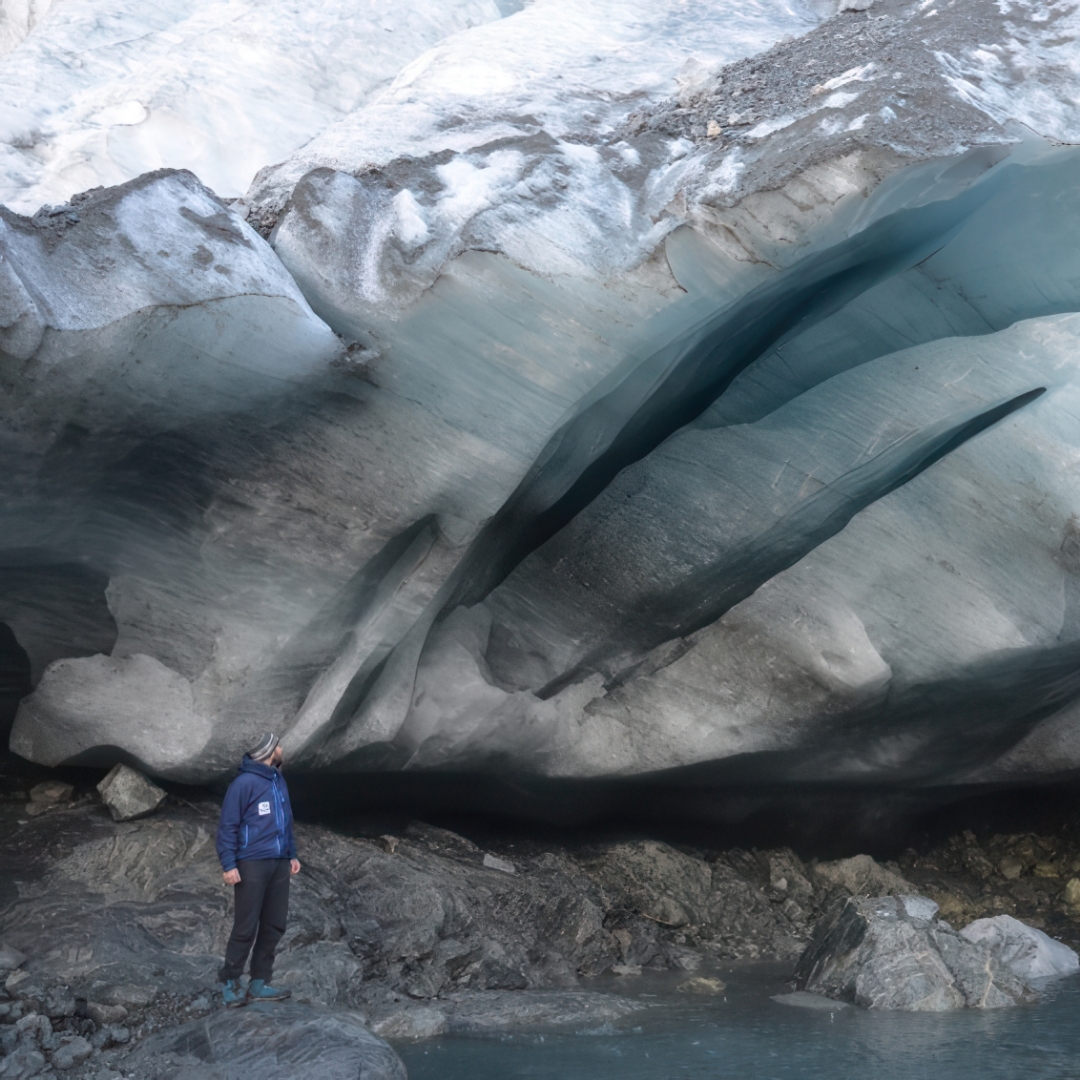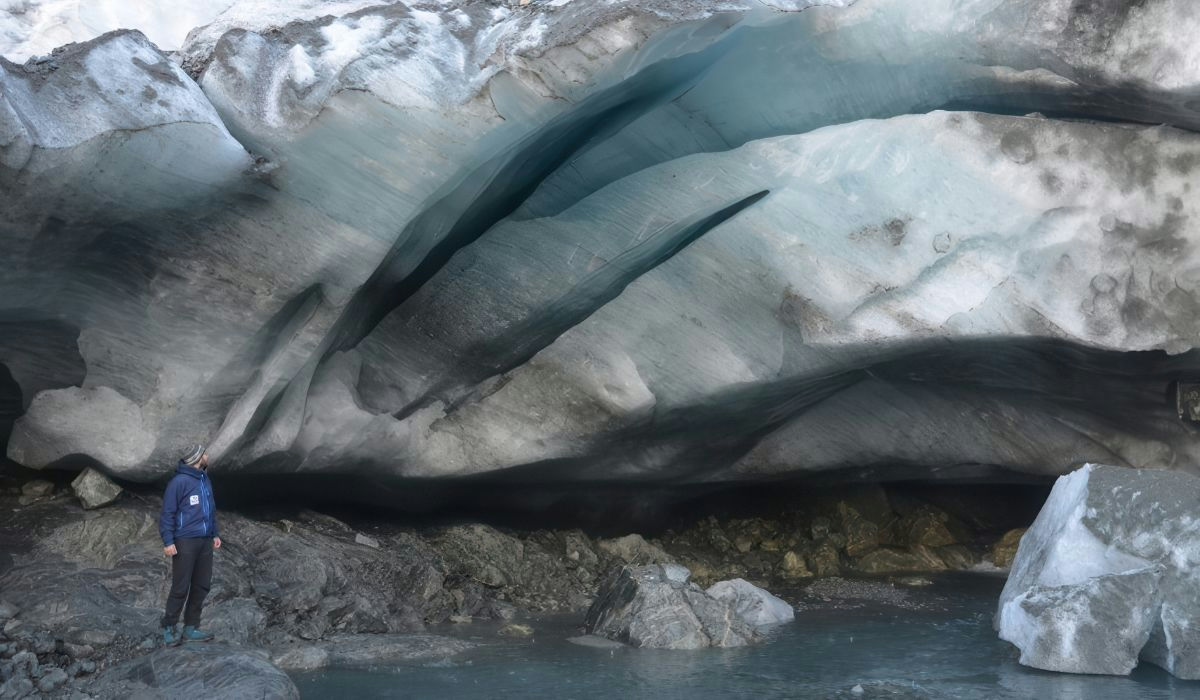
The rapid melting of mountain glaciers and the disappearance of the rivers they feed are powerful symbols of climate change. Glacial rivers are cold, nutrient-poor and unstable ecosystems, dominated by microbial biofilms. However, current knowledge of the microbiome of these rivers remains limited, making it difficult to understand how it reacts to the shrinking of glaciers.
In this study, we used metabarcoding (a technique that rapidly identifies the species present in a sample by analysing small pieces of DNA characteristic of each species) and metagenomics (a method that consists of analysing all the DNA present in a given environment, in order to learn not only about the species that live there, but also about their biological functions) to draw up a global inventory of the bacteria present in 152 glacial rivers from the planet’s main mountain ranges.
Our results show that the bacterial microbiome of these rivers is taxonomically and functionally distinct from those observed in other icy environments. It is highly diverse, with more than half the species specific to a given mountain region, some to a single site, and only a few cosmopolitan and abundant.
We demonstrate that geographical isolation and environmental selection structure their biogeographical distribution, with microbial compositions clearly differentiated between mountain ranges and between hemispheres. Phylogenetic analyses (methods that make it possible to reconstruct the relationships between different microbial species or strains on the basis of their genes or DNA) also reveal the existence of micro-diverse lineages, shaped by environmental selection, which probably contribute to the functional resilience and overall diversity of the microbiome in these environments.
The shrinking of glaciers due to climate change is therefore threatening this unique microbial ecosystem. Our study provides a global reference for future research into the effects of climate change on disappearing glacier ecosystems.