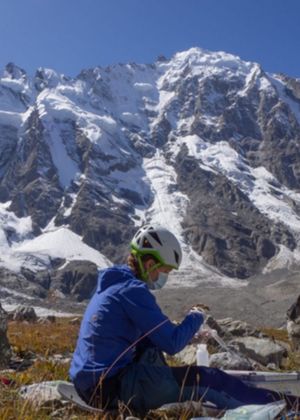
To understand the coupled physical, chemical and biological processes in high-mountain streams and rivers in the context of climate change.
Research topics
1
Understand the secrets of microbial life in high-mountain streams.
2
Unravel teh contributions of world’s streams and rivers to the global carbon cycle
3
Predict the future of glacier-fed streams as glaciers shrink owing to climate change
Our key projects
Kyrgyz Glacier Expedition
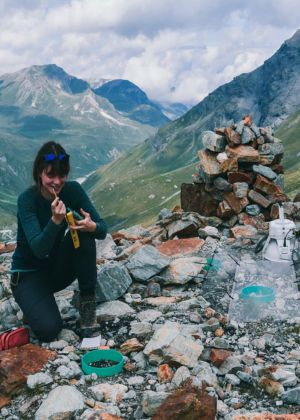
Expedition to sample Kyrgyze glaciers and streams with the aim to understand the microbial ecology of these vanishing ecosystems.
HydroMet Kyrgyzstan, CAIAG
High-Mountain Geohazards
Workshop on high-mountain geohazards related to glacier melt
Bhutanese Center of Meteorology and Hydrology, Glacier Stewardship Program
Tajikistan Glacier Expedition
Expedition to Tajikistan to study the biogeochemistry of glacier-fed streams in the Pamir region.
Our results and highlights
1
Vanishing Glaciers Project, The NOMIS Foundation
2
Vladimir Ivanovich Vernadsky Medal of the European Geosciences Union to Tom Battin
3
SNSF Paradoxon: Unveiling the success of a dominant primary producer in high-mountain streams; SNSF Water4All BREATHE: From sensors to new indicators for water qualitiy;
4
Publications in Nature, Nature Geoscience, Nature Microbiology etc
Team & talents
Lab team size
15-22
Skills developed by the scientific team
Think critically, scientific rigour, fundamentals in aquatic ecosystem science, biogeochemistry and microbial ecology
Other
The RIVER team is multidisciplinary, including expertise in sensor technology, molecular biology, bioinformatics, glaciology, ecology and evolution
Regional and social impacts
1
Glaciers are more than just frozen water; a new research frontier
2
The value of streams and rivers goes behond the value of hydropower. RIVER highlights the value of high-mountain stream ecosystem processes, including their unique biodiversity, water quality etc.
3
RIVER sampled and studied in an unprecedented effort glacier-fed streams worldwide
Perspectives and challenges
Priority 1
The establishment of a research-driven biobank to safeguard, harness and explore the micorbial biodiversity of icy ecosystems worldwide.
Priority 2
Establish a network of water quality sensors in Valais inclduing key stakeholders.
Main challenges
Securing funds for long-term research, that often has monitoring environmental variables. Monitoring systems should become part of infrastructure, thereby facilitating the acquistion of third-party funding.
Future Partnerships
Chinese Academy of Sciences, Institut Pasteur Paris
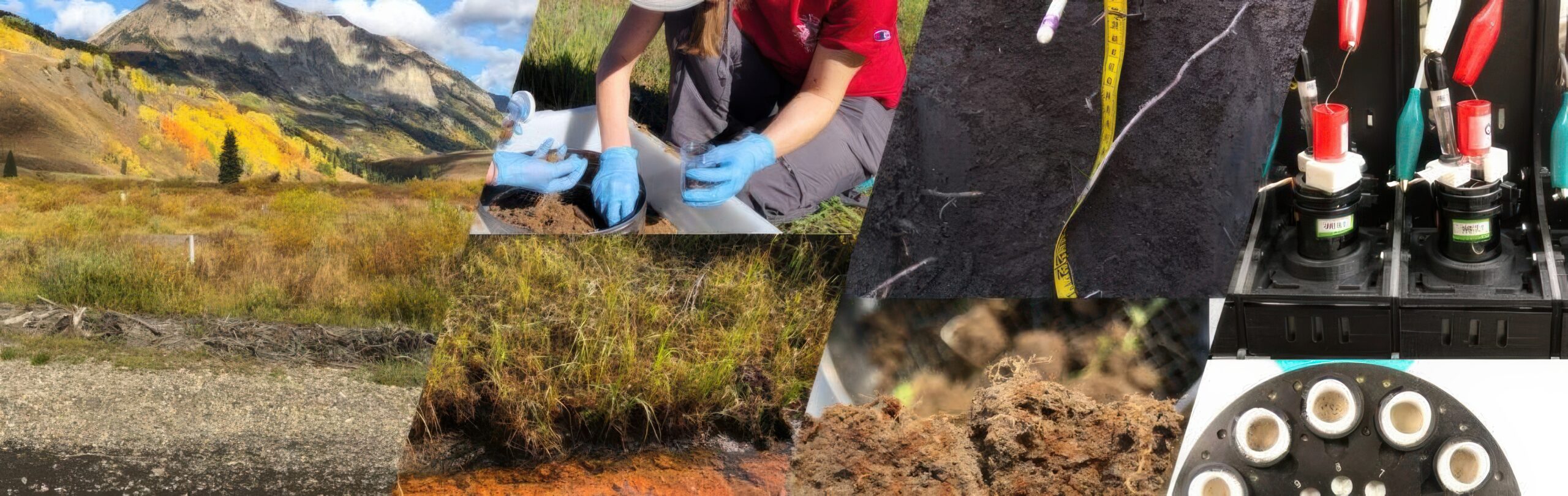
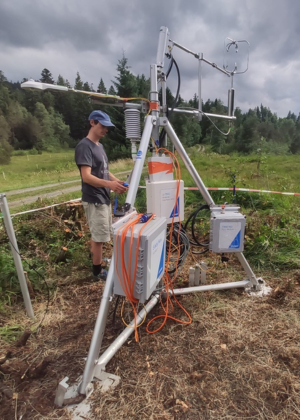
At the Soil Biogeochemistry Lab, we reveal how redox-driven processes govern carbon, nutrient, and contaminant cycling. Combining field observations with laboratory experiments, we build tools and models to predict ecosystem function and guide sustainable soil stewardship in a changing climate.
Research topics
1
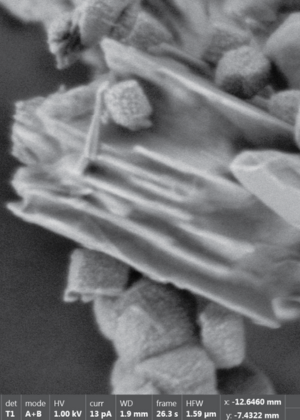
Mineral Redox Chemistry: Some tiny soil minerals (with iron and manganese) act like little batteries. We measure when they “give” or “take” electrons to predict how nutrients and pollutants change.
2
Soil Organic Matter Dynamics: Microbes eat dead leaves and roots for energy. We measure that energy to learn when carbon stays in the ground or turns into gases that affect our climate.
3
Sustainable Soil Management: Soils have tiny airless pockets where extra greenhouse gases can form. We map where and how strong these pockets are to help people grow healthy crops while keeping water clean and emissions low.
Our key projects
Mountain Soils
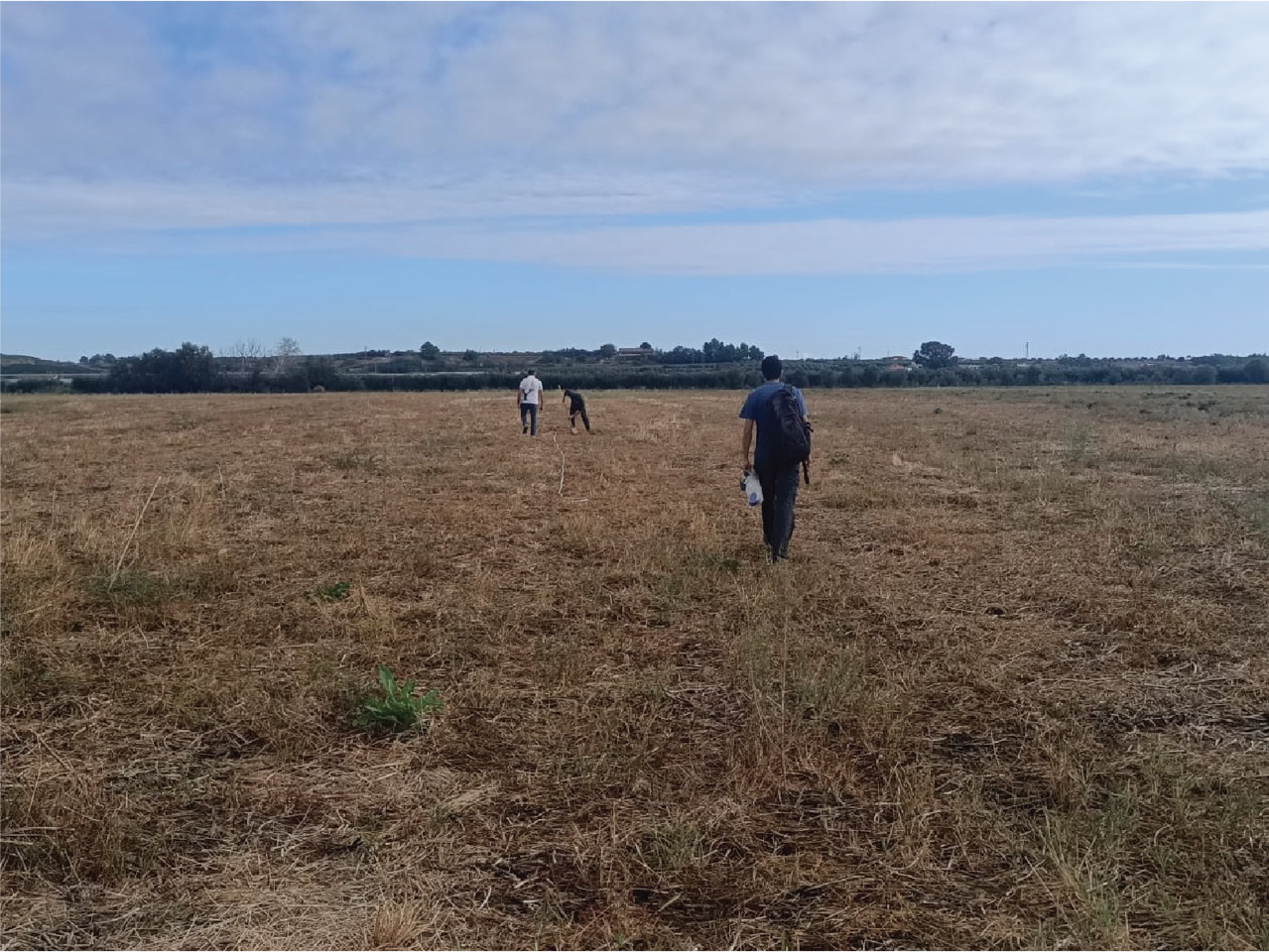
We map soil organic carbon across topographies in Vallon de Réchy and Binntal and pinpoint the chemical, physical, microbial, and geological drivers of where carbon accumulates. This helps predict how these stocks may change under future climate. More information: https://www.epfl.ch/labs/soil/soil-organic-carbon-in-mountain-soils/ and data: https://alpinesoc.epfl.ch/
University of Neuchâtel
Manganese minerals
We measure how manganese minerals with different structures exchange electrons. Our findings help improve predictions of mineral-mediated reactions, including pollutant transformations. More information: https://www.epfl.ch/labs/soil/electrochemical-analysis-of-the-redox-properties-and-reactivity-of-manganese-oxides-strong/
University of California Davis Tongji University
Soil management
We test how no-till vs plowing change soil carbon storage. We work on ongoing field trials in Switzerland, Italy, and Brazil. Our results guide climate-smart farming. More information: https://www.epfl.ch/labs/soil/effects-of-tillage-practices-on-soil-carbon-sequestration-mechanisms/
University of Lausanne Agroscope Changins University of Basilicata University of Dschang
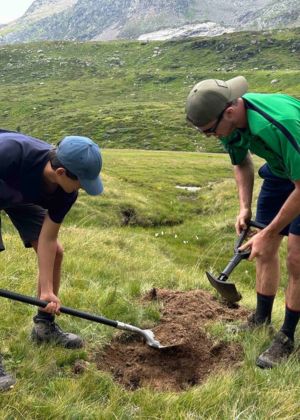
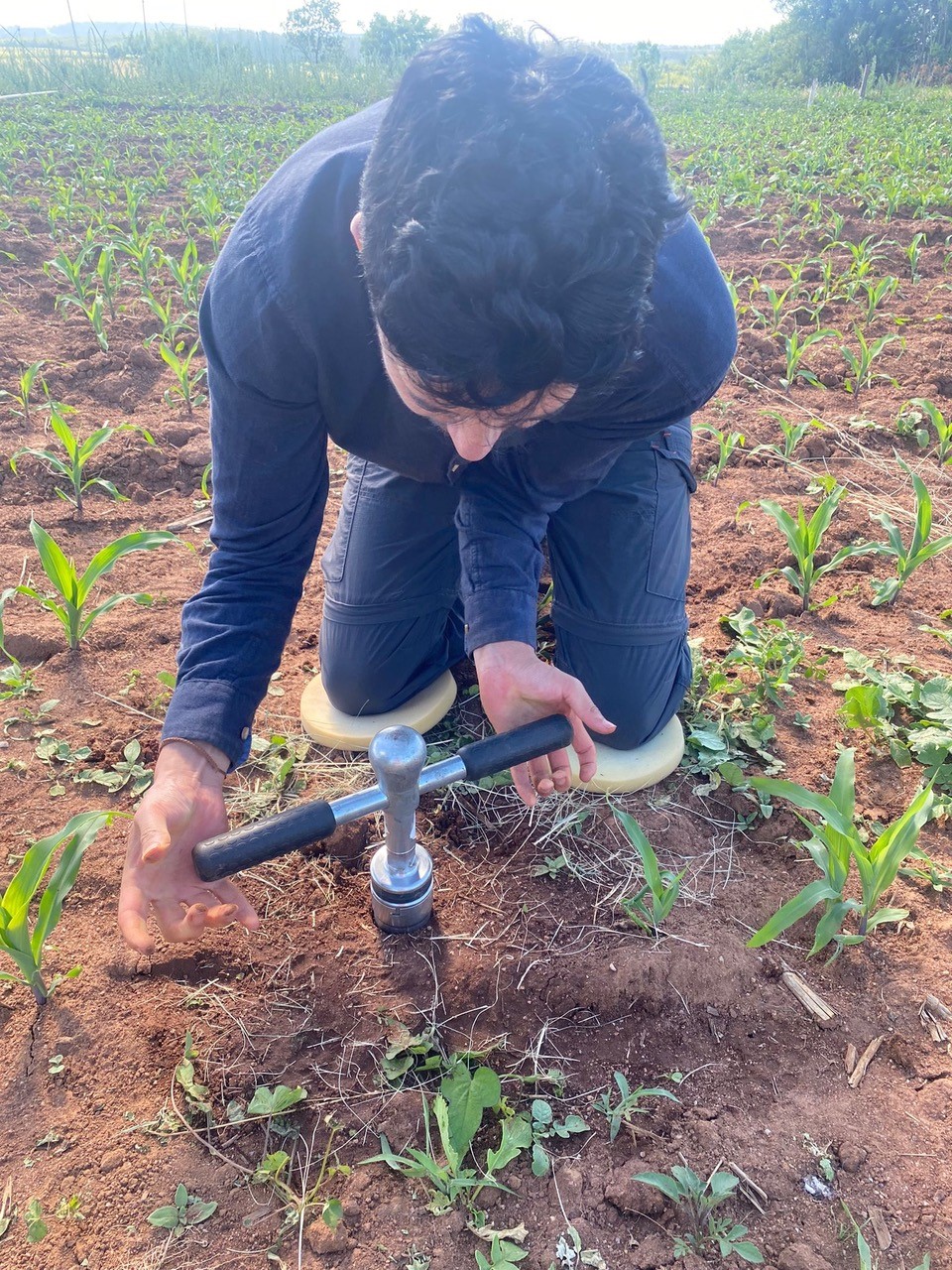
Bence Dienes: PhD student in the group since February 2022. Works on project on soil organic carbon in alpine soils. His work encompasses field work as well as laboratory manipulation experiments.
Skills developed by the scientific team
Project management and supervision, experimental and laboratory skills, experimental design, field skills, data management, communication skills.
Other
Interdisciplinary team with backgrounds in environmental chemistry, pedology, environmental microbilogy, agronomy
Regional and social impacts
1
By revealing how soils store carbon, purify water, cycle nutrients, and transform pollutants, our research turns molecular insight into tools for climate action, clean water, and resilient food systems—guiding policies and practices that protect people and nature.
2
Our research maps soil organic carbon stocks in valleys like Réchy and Binntal and identifies the drivers of their stability. These insights help anticipate how Alpine soils—and their organic carbon—will change as the climate warms.
3
We train students and interns in field methods, laboratory experiments, GIS/modeling, and project management & supervision, producing job-ready talent for environmental consulting, hydropower, agro-tech, and remediation companies.
Perspectives and challenges
Main opportunities
‘Assess how snow-cover thickness/duration shifts Alpine soil carbon cycling.
Help agriculture adapt to hotter, drier summers (water retention, cover crops, tillage).
Improve soil modules in models to forecast local climate impacts.
Optimize wetland restoration for net carbon gains while managing methane.
Build open datasets & sensor networks for long-term Alpine monitoring.
Main challenges
Separating climate vs. topography/land-use effects on soil processes.
Harsh Alpine conditions: access, safety, and instrument reliability.
Scaling from micro-sites to catchments while tracking uncertainty.
Limited long-term data; harmonizing measurements and standards.
Integrating field, lab, and model results into actionable guidance.
Future Partnerships
Cantonal agencies and land managers
Microbiome Adaptation to the Changing Environment (MACE)
Prof. Ianina Altshuler
Microbiome Adaptation to the Changing Environment (MACE)
At the MACE lab, we study how microbes survive and adapt in snow, ice, and frozen soils. Through fieldwork, lab experiments, and molecular analyses, we uncover how these resilient life forms respond to a warming climate and help shape fragile alpine and polar ecosystems.
Research topics
1
Permafrost thaw and greenhouse gas release: When frozen ground thaws, trapped carbon becomes available to microbes, leading to the release of greenhouse gases like CO₂ and methane. We study how microbial communities shift with warming and how these changes influence ecosystem stability and climate feedbacks.
2
Microbial adaptation in the cold: We study how microorganisms survive and stay active in snow, ice, and frozen soils. They use special biochemical strategies, to function at subzero temperatures. These adaptations reveal how life responds to environmental change.
3
Microbial interactions and symbioses: Microbes interact constantly, sometimes cooperating, sometimes competing. We explore how these relationships shape microbial communities in cold environments and how partnerships between microbes and plants or animals help both adapt to harsh and changing conditions.
Our key projects
Alpine Microbiome Under Pressure
Across multiple Swiss-Alpine summits, we use passive warming plots to study how rising temperatures affect soil microbes and greenhouse gas emissions. These experiments reveal how mountain ecosystems respond to warming.
Swiss Federal Research Institute WSL
Snow Decline in the Alps
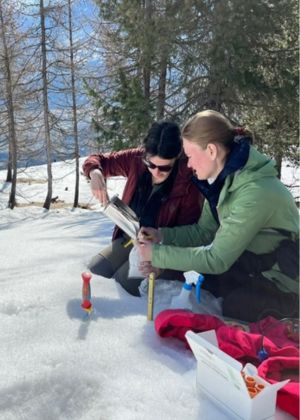
We study how reduced snow cover affects alpine soils and their microbes using field plots with snow removal and addition. Tracking changes across seasons helps us understand how shrinking snowpacks alter soil health, nutrient cycles, and greenhouse gas emissions.
Greenland Microbes on Newly Exposed Land
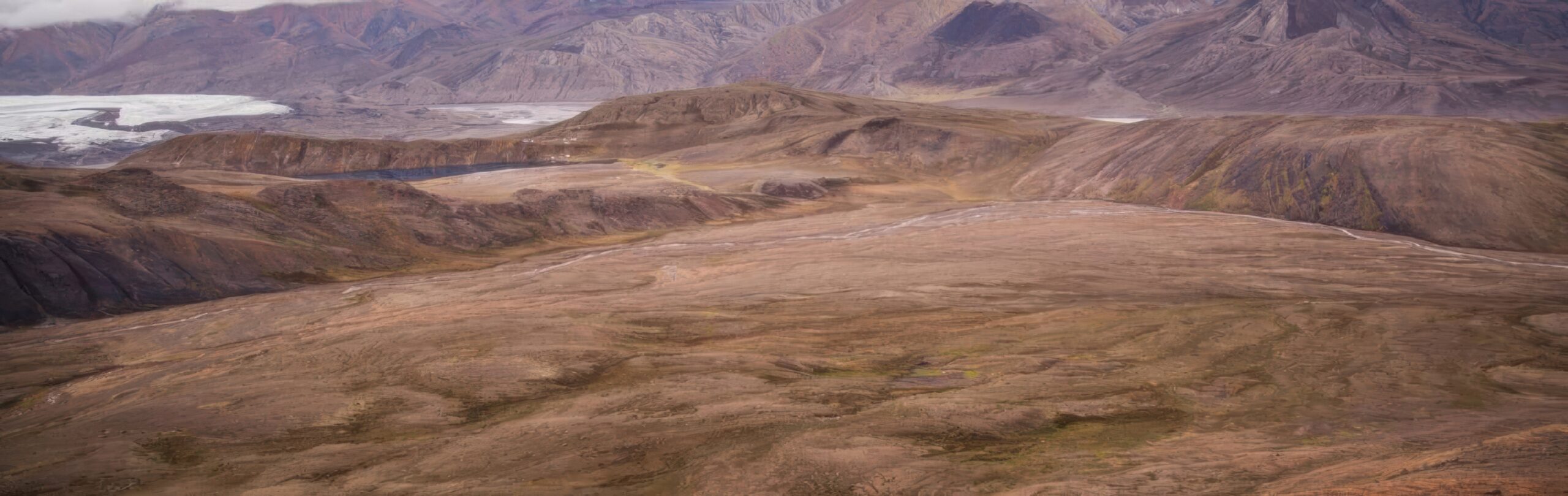
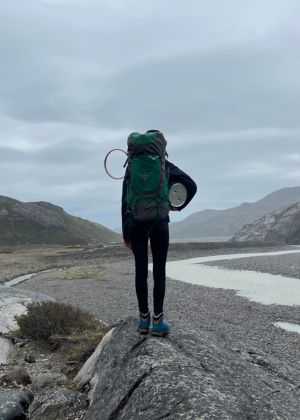
As Greenland’s glaciers retreat under climate warming, new soil ecosystems emerge where microbes quickly take hold. We study how these early communities transform lifeless sediments into richer soils and influence greenhouse gas fluxes.
ECEO -EERL
Our results and highlights
1
Our alpine field studies reveal rich and unique microbial diversity across different mountain sites, showing that even nearby ecosystems can host distinct microbial communities. We also find that while alpine soils release CO₂, many simultaneously take up methane (CH₄), helping to potentially offset greenhouse gas emissions.
Team & talents
Lab team size
8 people in the lab (not counting Master students)
Regional and social impacts
1
Our research helps predict how climate change affects alpine mountain and polar ecosystems. This will guide conservation and public awareness of cold regions.
2
Studying alpine soils and snow systems in Valais allowes us to support sustainable land use, biodiversity conservation, and climate adaptation strategies in this sensitive alpine region.
3
Preserving and studying cold-adapted microbial organisms opens new possibilities for sustainable biotechnology, from green chemistry and environmental solutions to novel enzymes for industrial applications.
Perspectives and challenges
Main opportunities
A main priority is to understand how warming will reshape Alpine ecosystems, microbial activity, and greenhouse gas balance. * Cold-adapted microbes offer untapped potential for sustainable biotechnological and industrial innovation.
Main challenges
Linking microbial data with climate models is challenging but can potentiall greatly improve predictions of greenhouse gas feedbacks.
Cookie policy
By continuing to browse this site, you agree to the use of cookies to improve your user experience and for the generation of visit statistics.
You can customise the use of cookies using the buttons below.