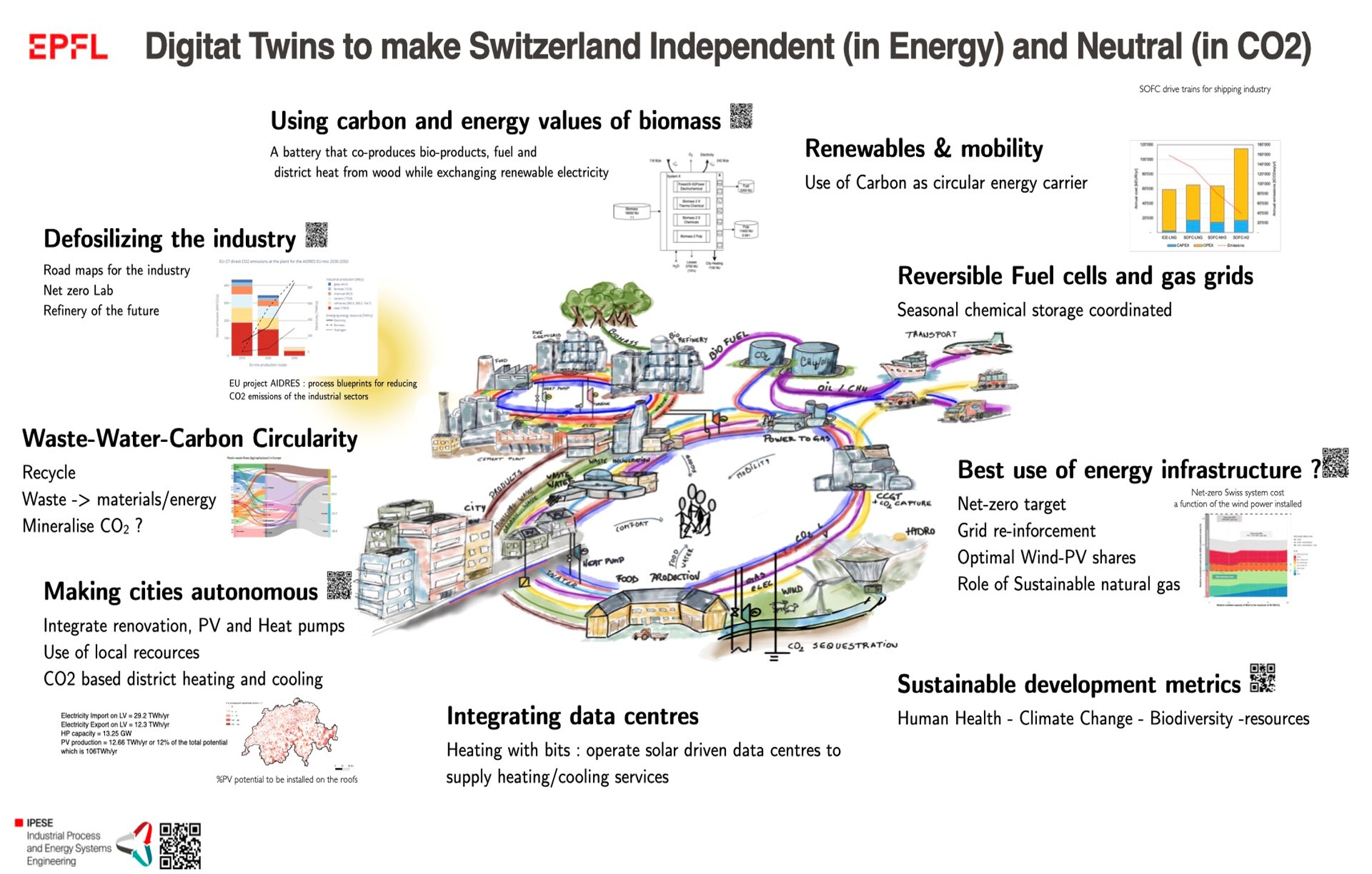
IPESE develops digital twins based optimization for generating net-zero transition, integrating life-cycle metrics. Work spans efficient bio-based processes, CO₂ capture, high-efficiency SOFCs, waste gasification, and urban renewable hubs linking industry, energy, and smart districts.
Research topics
1
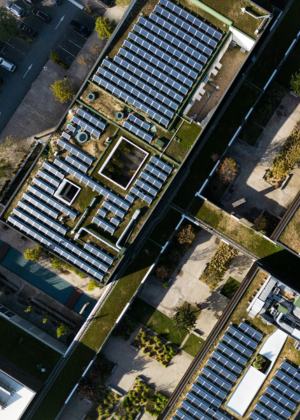
Integration of renewable energy in urban systems, considering local communities, photovoltaics, smart operation, efficiency and advanced energy converion technologies like heat pumps and district heating.
2
Decarbonising the industrial production, by efficient production, heat recovery, CO2 capture, renewable energy and waste management intergation and industrial symbiosis.
3
Modeling the energy tranistion : how is the energy system adapating to the innovation and the decarbonisation actions.
Our key projects
PinchSmall
A computer aided decision support for quick evaluation of decarbonisation options of industrial processes.
EPFL
HES-SO
Swiss Federal Office of Energy
Net Zero Lab
Decarbonisation strategies for city integrated aluminium production.
IPESE
HES-SO
Oiken
Novelis
Urban Energy Twins
Urban Twin and Sweet Swice & Sweet COSI, towards a holistic modle of the integration of renewable energy in cities : from behaviors to energy system adaptation.
Sweet consortium with utility companies
Our results and highlights
1
Indpendant and neutral Switzerland : what is the expected cost and consequences
2
Several best papers and poster awards in international conferences
3
Our lab has contributed to the industry decarbonisation roadmap report for the EU commission: AIDRES, “Advancing industrial decarbonization by assessing the future use of renewable energies in industrial processes”: https://data.europa.eu/doi/10.2833/696697
4
François Marechal has contributed to the creation of six start-up companies : Bluewatt Engineering now part of PSE Siemens : energy efficient waste water treatment, Trea-tech : hydrothermal gasification for water treatment and biomass conversion, Exergo.ch : multi-energy systems design by CO2 based district heating and cooling systems, Urbio : decision suppport in urban energy system planing. Qaptis : CO2 capture in transportation systems. Emissium : CO2 tracking and certification.
5
CO2 network demonstrator in EPFL Valais Wallis campus.
Computer aided process and energy system engineering, operation research, machine learning and programming, pinch analysis and process integration methods
Regional and social impacts
1
Showing and quantifying decarbonisation pathways for the decarbonisation and the energy transition by integrating technological innovations. In the context of the International Energy Agency, coordination of a task to develop a digital twin strategy for the industrial processes decarbonisation: https://iea-industry.org/tasks/process-integration-for-industry-decarbonization/
2
The sustainability (economic, environmental and societal) impact of Net Zero Valais : what is the meaning of too expansive ?
3
What is the impact of integrating innovation for the energy system decarbonisation ?
4
Demonstrating the role of local energy communities in the energy transition: giving power to the people by implementing decentralised solutions
Perspectives and challenges
Main opportunities ?
Industry decarbonisation in a transitioning worldn Adapting the infrastructure to integrate decentralised productions, industrial symbiosis at the regional scale.
Main challenges
Integrating innovation for the energy transition
Future Partnerships
Our lab has a long tradition of collaboration with the industry, we support collaboration for knowledge and technology transfer.
School of Life Sciences (SV)
Clinical Neuroengineering
Prof. Friedhelm C. Hummel
Defitech Chair for Clinical Neuroenginering - Hummel Lab
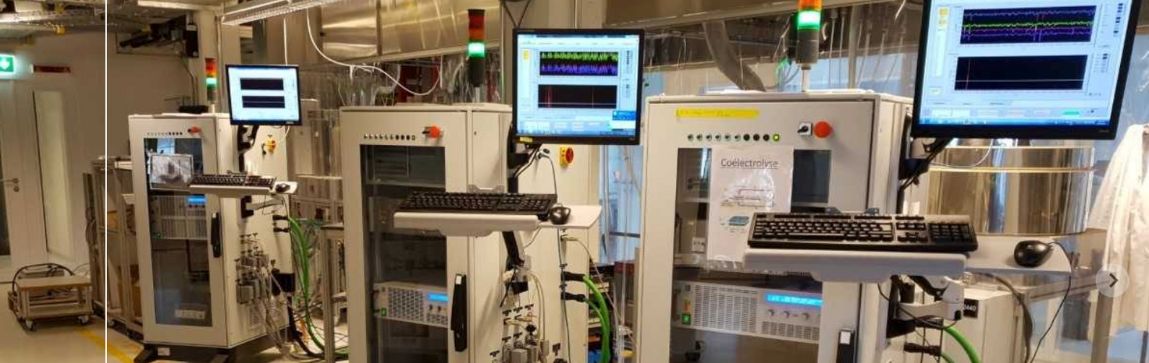
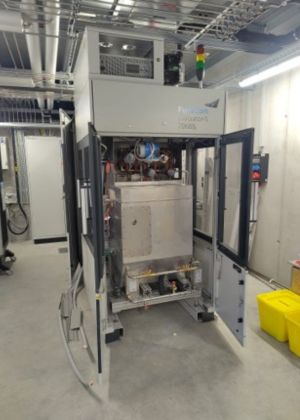
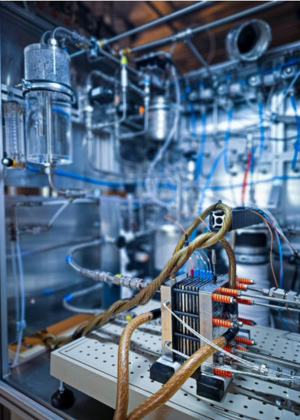
Conception, design, fabrication, assembly, testing, diagnostics, analysis and modeling of fuel cells and electrolysers from Watts to 100 kW, in both high temperature ceramic (750°C) and ambient temperature polymer (20-70°C) technologies, for both natural and renewable fuels.
Research topics
1
Understanding of the long-term durability of fuel cells and electrolysers, separating and quantifying the various performance degradation processes with time.
2
Designing, fabrication and buiding of fuel cell/electrolyser components and of dedicated test equipment, in particular for in situ measurements.
3
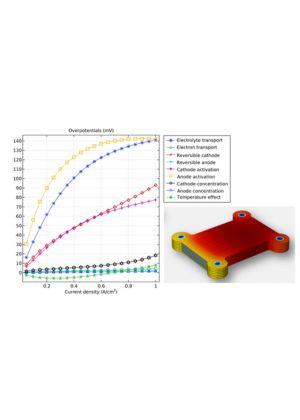
Multi-physics multi-scale modeling, from micrometric interfaces to complete systems, to support the design (axis 2) and performance understanding (axis 1).
Our key projects
Reversible-CH4
We develop a complete pilot installation to demonstrate real seasonal storage of renewable electricity to methane injected into the gas grid, using a reversible fuel cell/electrolyser system (10/30 kW), with negligible emissions. Full operation expected in 2027.
SolydEra (VD)
HES-SO-Sion Despraz (VD
SP Groups (VS VD GE)
Oiken (VS)
Gaznat (VD)
ANEMEL
Alcaline membrane water electrolysis, using only Earth-abundant materials, is designed and characterised in our lab, which promises game-changing performance for H2/O2 production. We validated a 1 kWe unit in our lab for >1000h with our home built test bench.
Canton VS - GEM start-up DeltaSpark EU partners Gaznat (VD)
HYSPIRE
Steam electrolysis in oxygen ion or proton conducting ceramics is performed at 500-700°C at small scale. In parallel, a powerful 3D CFD coupled multi-physics steam electrolyzer stack dynamic model was set up.
SolydEra (VD; IT)
EU partners NCEPU (China)
Our results and highlights
1
Three connected papers were published on alkaline membrane water electrolysis, reporting some electrochemical analysis for the 1st time (on a stack); one paper reached the Journal cover.
2
Xinyi Wei (PhD thesis May 2025) received the Best Researcher of the Year Award from the EU Clean Hydrogen Partnership (Nov 2025), among 42 top candidates, a high international distinction for a young researcher (<35 yrs).
Suhas Nuggehalli received a PhD Excellence distinction (Aug 2025) for his keen Entrepreneurship in parallel to the PhD thesis.
3
2 new very competitive EU calls were won (1.6 M€), with scores of 14/15 and 15/15. This maintains GEM as the No.1 lab of EPFL in EU grants.
4
1 patent filed, 1 start-up created (December 2025, DeltaSpark)
5
17 Journal articles published in 2025, 1 book.
Team & talents
Lab team size
21 members + 10 master students + 3 guest PhD students
The GEM lab is composed of 1/3rd PhD students, 1/3rd scientists, 1/3rd engineers
Specific Team Member
Samaneh Daviran develops novel protective coatings against steel corrosion, using cheap wet deposition techniques, and obtained a competitive Ignition Grant to pursue this work.
Hangyu Yu ran a fuel cell system on natural gas for 2 yrs, applying optimized control, succesfully defended his PhD thesis in Sep 2025, publishing several papers. His work is highly fertile for follow-up proposals.
Skills developed by the scientific team
Getting hands dirty in buiding and testing devices and specific characterisation equipment.
Training the brain into learning softwares, underlying maths, and programming code. Hangyu Yu released an electrochemical analysis tool to the scientific community.
Other
GEM Team members learn self-responsibility, how to work in a team, to raise funding, to network, to collaborate with other academic and industrial entities, and the necessity of legal frameworks.
Suhas Nuggehalli and Luc Bondaz raised 1.4 MCHF funding from multiple sources for their startup DeltaSpark.
Regional and social impacts
1
Storing excess electricity into fuels for later reuse helps in making us less dependent on winter electricity import, which will become even more crucial if nuclear power is phased out. Already today we export 2x in summer what we import in winter.
2
Our seasonal storage pilot installation, CH4 to power (winter) and power to CH4 (summer), will be a first-of-a-kind hardware demonstration without simulating any component.
3
Our lab trains engineers for tomorrow’s technologies that define and shape the energy transition. Affordable available energy (clean and efficient) is a backbone of a productive industry and of a stable supportive society.
4
We initiate 15-20 new master students per year into our activities via direct project work.
Perspectives and challenges
Main opportunities
SOFCs on NG (elec. efficiency >60%, no pollution) are in high demand, owing to the exponential rise of AI and its power demand (1 data center = 28 MWe)
Demonstrating full seasonal storage feasibility with reversible power-to-gas-to-power and the gas grid
10/30 kW installation in Energypolis and 50 / 150 kW installation in Aigle with Gaznat and SolydEra
Produce clean liquid fuels from electricity and carbon-sources
Developing compact footprint alcaline membrane water electrolysis
Main challenges
Funding cuts and ferocious funding competition
Lack of test and fabrication infrastructure space
Europe’s harmful self-isolation in its energy transition choices.
Future Partnerships
Reinforce the Gaznat-SolydEra partnership; SolydEra is SOFC technology leading
Partnerships with other fuel cell / electrolyser companies
Alignment with the gas industry for CH4 as vector
Cookie policy
By continuing to browse this site, you agree to the use of cookies to improve your user experience and for the generation of visit statistics.
You can customise the use of cookies using the buttons below.