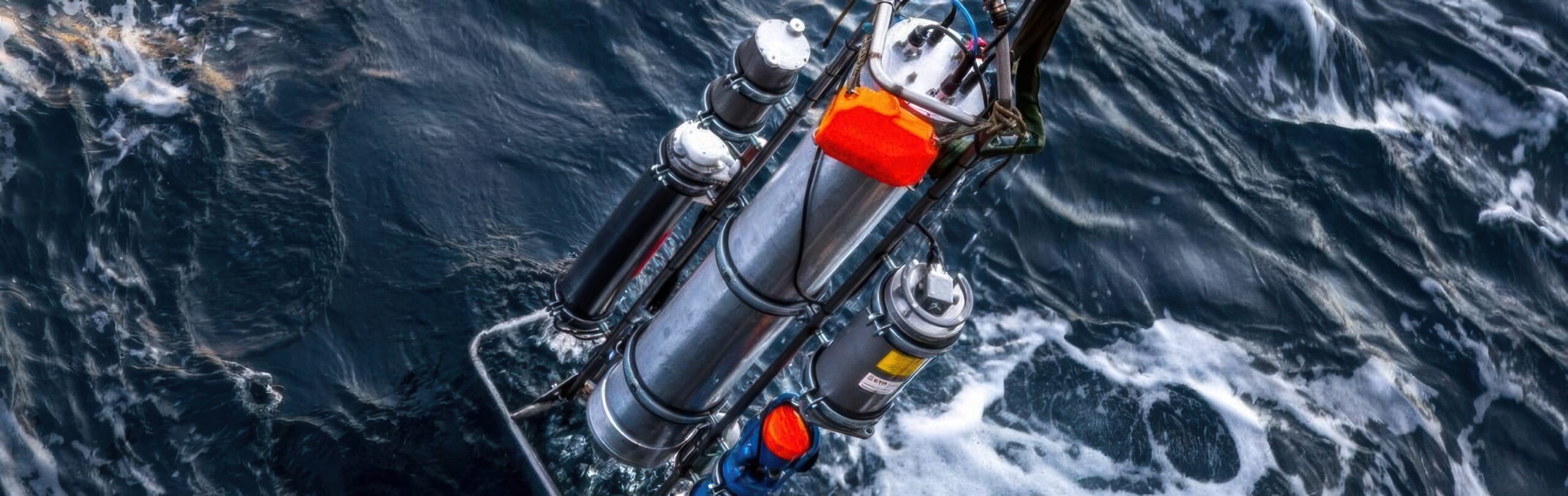
SENSE missions are to explore climate change and greenhouse gas biogeochemistry through engineering / new technologies, with a focus on extreme and marine environments. The corresponding motto summarizing our mission could be expressed as “Tech for Climate”.
Research topics
1
Greenhouse gas biogeochemistry in aquatic environments
2
Smart sensors
3
Low tech and citizen science
Our key projects
GreenFjord
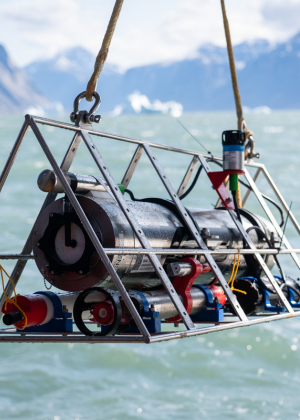
Collaborating with this flagship project of the Swiss polar institute, we have evaluated CH4 fluxes from southwest Greenland fjords in summer, making use of our in-situ sensor called SubOcean.
Swiss polar institute Forel Heritage association
Swiss lakes and LéXPLORE
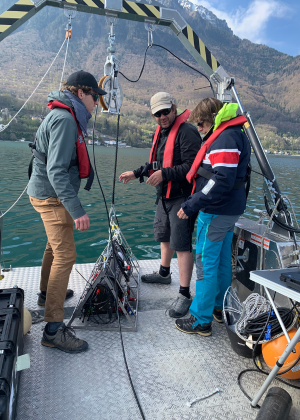
We have started to acquire detailed measurements of dissolved N2O and dissolved CH4 in Lake Geneva and other Swiss lakes at different seasons, with the final goal to evaluate their production and consumption mechanisms, as well as fluxes towards the atmosphere.
LéXPLORE platform Eawag UNIL
Sailowtech
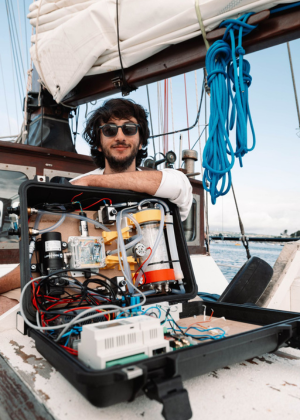
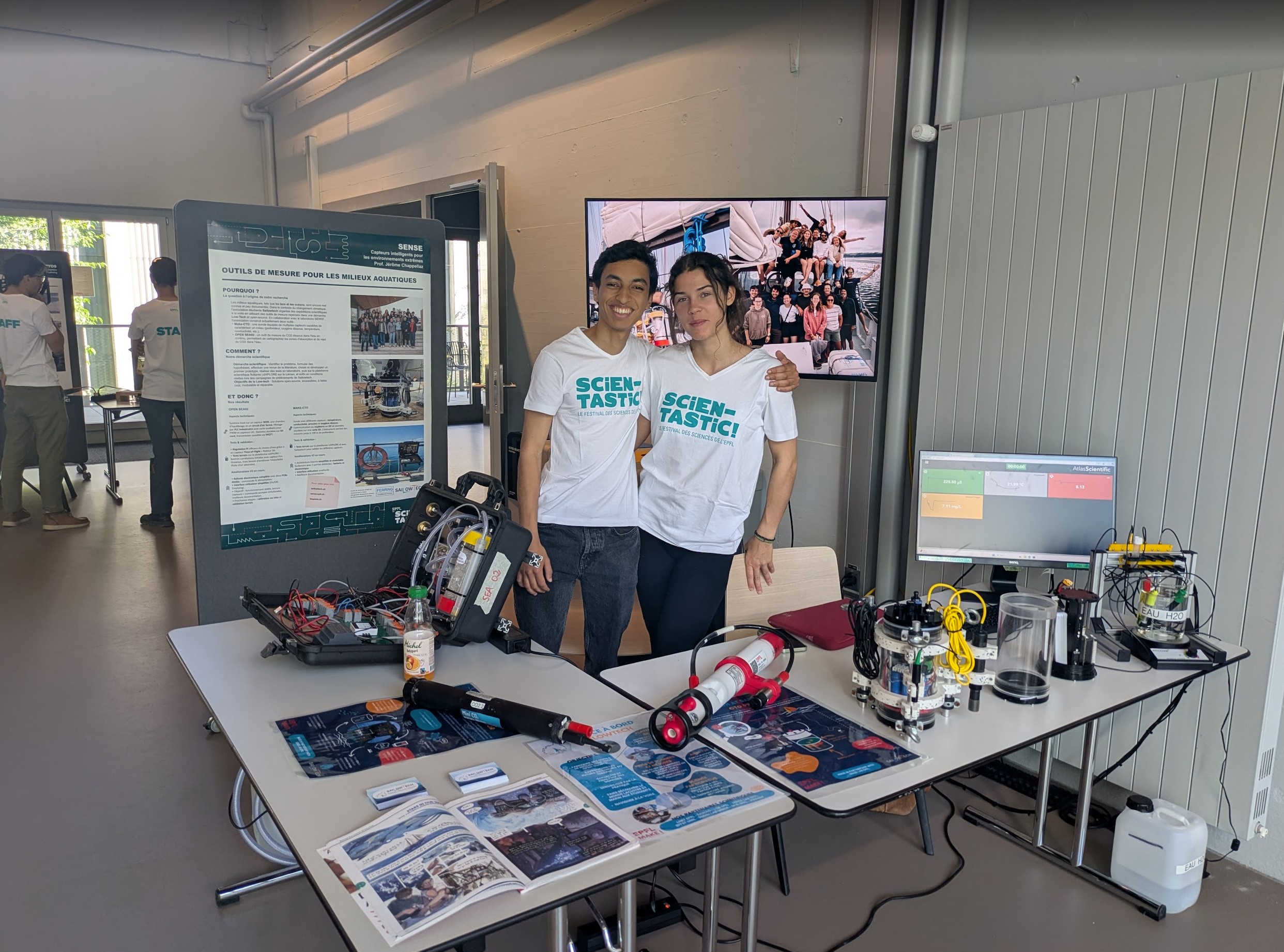
We design, construct and improve low-cost sensors to measure temperature, salinity, dissolved oxygen and dissolved CO2 in aquatic environments. This will help to develop citizen science for a better spatial and temporal recording of these important variables.
Sailowtech association MAKE projects of EPFL
Our results and highlights
1
Our detailed in-situ analyses of dissolved CH4 in Lake Geneva have demonstrated that high concentrations far from the Rhone river delta are mostly generated by lateral transport from the delta itself.
2
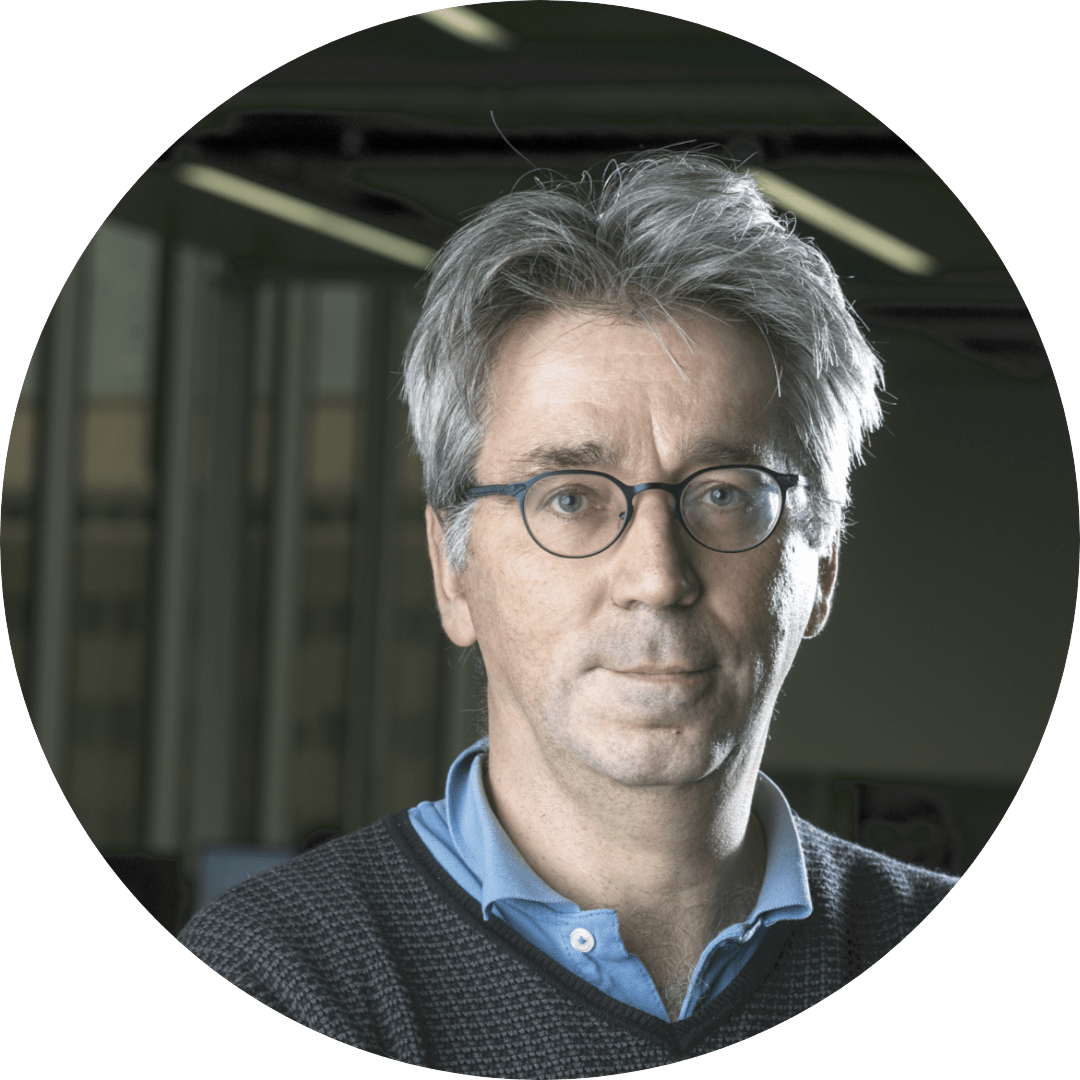
Prof. Dr. Jérôme Chappellaz, who leads the SENSE unit, received the Belgica Medal from the royal academy of sciences in Belgium.
3
Projects supported by the Swiss polar institute : BASAL-CH4 and NITRO-BAFFIN
Team & talents
Lab team size
7
Introducing a specific team member
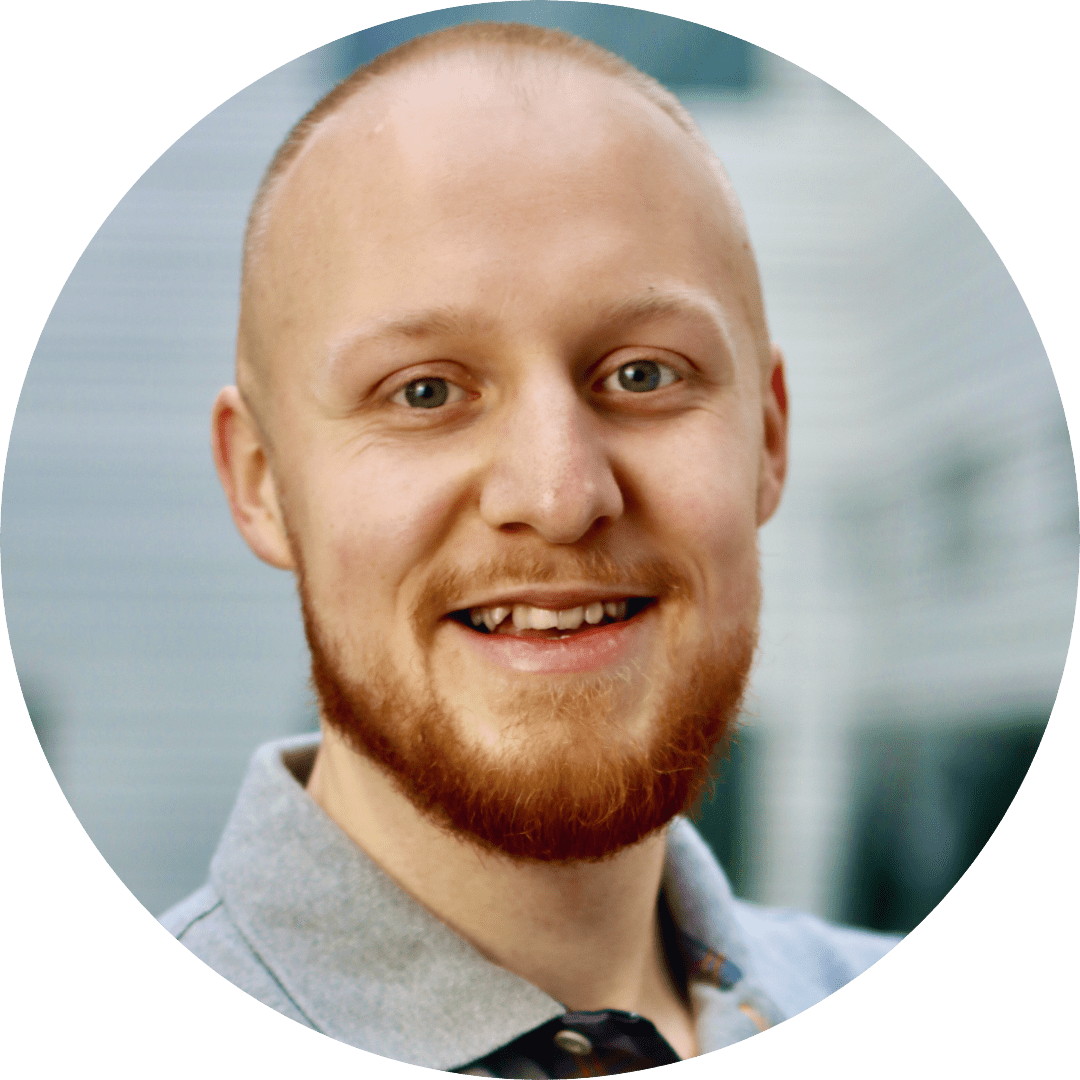
Yes, Sébastien Lavanchy as support engineer. A kind of McGyver spirit, capable of handling all aspects of engineering for development and field deployment.
Skills developed by the scientific team
Multi-disciplinary approach at the interface between environmental geosciences and engineering. Field work and associated logistics. Demanding field environments (lakes, polar regions).
Other
Communication. Such a research topic is of interest for a broad public. Therefore it is important to be able to handle media interviews for instance.
Regional and social impacts
1
Our research provides essential information regarding potential biogeochemical feedbacks activating under a warmer world.
2
Our research shows that the canton of Valais takes its share of responsibility in better understanding how the climate system works.
3
Our research on new sensors may lead to discoveries finding ramifications into industrial applications.
Perspectives and challenges
Priority 1
Improve our current sensors
Priority 2
Deploy the sensors in collaboration with international programs
Priority 3
Expand the capacity of citizen science around aquatic environments but possibly other ones as well.
Main challenges
There are engineering challenges, requiring to develop connections with different disciplines at EPFL. There are also deployment challenges, as we rely in part on the complex logistics of foreign operators in polar regions. Last but not least, citizen science requires to minimize the budgets of the instruments, which is not always easy.
Future Partnerships
Other Professors within EPFL. Collaboration with Eawag around new types of CTD instruments. Collaboration with other nations (in particular Norway) for deployment in polar oceans.
Laboratory for Functional Inorganic Materials (LFIM)
Prof. Wendy Queen
Laboratory for Functional Inorganic Materials (LFIM)
Chemistry
Our mission
LFIM pioneers advanced porous materials for gas and liquid separations—specializing in CO₂ capture, water purification, and recovery of valuable metals from waste—to reduce global energy consumption and advance environmental stewardship.
Research topics
1
Carbon Capture: We will develop better ways to remove CO2 directly from the atmosphere e and from large point sources, with the aim of making the process cheaper and more effective to help reach carbon neutrality goals.
2
We create cost-effective and sustainable ways to extract valuable metals like platinum, palladium, and gold from waste for its reuse, with the aim of helping ensuring secure material supply chains necessary for the energy transition while promoting environmental stewardship.
3
LFIM designs selective porous materials capable of removing targeted contaminants from water sources, with the aim of helping secure clean water access for all and aid environmental remediation.
Our key projects
Carbon Capture Demo Unit
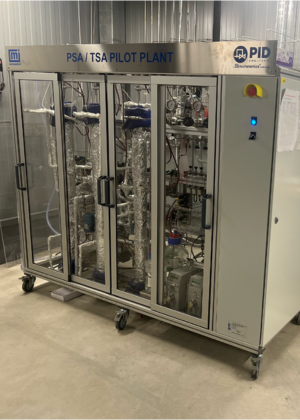
We have constructed a demonstration unit for carbon capture. This combined with process modeling allows us to optimize our materials performance in a given separation process and estimate the cost and energy consumption of per ton of captured CO2.
Gaznat, SFOE, Etat du Valais and Casale
Direct Air Capture Materials
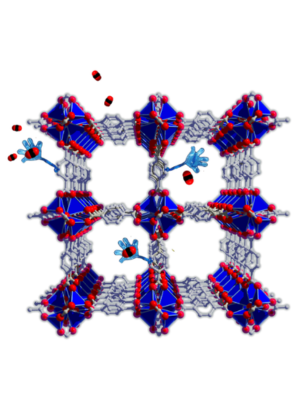
We are developing porous materials able to capture CO2 directly from the air. The project will feature the design and implementation of a CO2 capture unit that will be installed at a local incineration facility in conjunction with ton scale carbon capture from the plant itself.
Enevi
Advanced MOF Composites
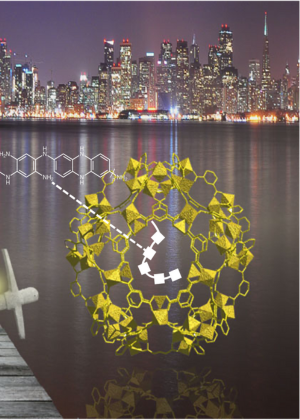
Developed innovative MOF/polymer composites using post-synthetic modification to selectively extract precious metals (Pt, Au, Pd) and toxic contaminants (Cr, As, Pb) from water, achieving scalable solutions for e-waste recycling and environmental remediation.
University of Basel, Columbia University, Technical University of Dresden, European Synchrotron Radaition Facility, University of Tokyo
Gold Recovery Exhibit
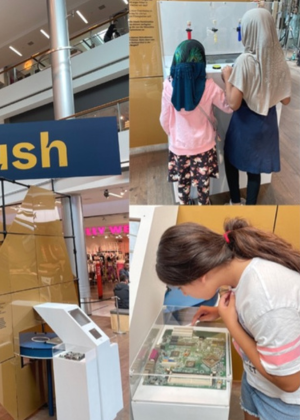
An interactive gamified exhibit with 4 stations demonstrating gold recovery from e-waste using our materials. Toured Switzerland and San Francisco, engaging thousands in circular economy concepts. Won 2022 SNSF Agora Optimus Prize for science communication.
University of Basel, Columbia University, Technical University of Dresden, European Synchrotron Radaition Facility, University of Tokyo
Our results and highlights
1
A postdoc in our laboratory, Nazanin Taheri, just received a brigde proof of concept grant to help bring her technology to market.
2
Dr. Till Scherlenleib has been selected as one of the MatChem PhD Student Award winners for 2025. His PhD thesis, “A Local Structure Perspective on Metal–Organic Frameworks”, was recognized for its outstanding contribution to the field. Timo Felder for being awarded the Outstanding Poster Award at EuroMOF2025. Sanjay Venkatachalam received the Outstanding Poster Award at the GRC on Carbon capture, utilization, and storage.
3
Our NCCR made it to the final round. We should be prepared with a press release in case it happens.
4
. We just had the postdoc, Dr. Nazanin Taheri, get the bridge proof of concept which could be a second start up coming out of our team. We have had two patent applications in the last year filed.
Team & talents
Lab team size
15
Introducing a specific team member
Timo Felder, is an exceptional Swiss student who has published an impressive number of papers so far and will complete his PhD in November. He just won the poster competition at the EuroMOF conference in Crete, which is impressive given the high competition level.
Skills developed by the scientific team
Inorganic and organic synthetic techniques to make builiding blocks and then porosu materials from those building blocks, stndard characteirzation techniques like NMR, IR TGA, SEM, Surface area analysis, and adsorption and breakthrough studies, advanced in-situ characterization techniques (XRD, PDF, XAS) to look at mechanisms, degradation pathways, and assess the structure and performance of porous materials, handling air sensitive materials, structuring techniques, process modeling design, and life cycle assessments.
Regional and social impacts
1
We develop advanced porous materials to combat climate change through efficient CO₂ capture, purify water by removing toxic metals, and recover valuable metals from e-waste—enabling a circular economy while training future leaders and engaging society through research translation.
2
LFIM helps boost visibility of Valais as a world-class science hub, helps drive economic growth through the creation of startups and bringing in investments, trains future scientists globally, engages the public via GoldRush exhibitions and local media (Canal 9, Nouveliste, RTS, Migros displays), and strengthens regional partnerships for the energy transition through presentations to decision makers and working wiht local industry, and engaging with local schools
3
Our research tackles the industrial energy challenge head-on: separation processes consume 10-15% of global energy. We deliver economic impact through startup creation (Sunchem), patent development protecting novel materials and methods and tech transfer, and through direct industry collaborations in an effort to help bring cutting-edge separation technologies to market.
Perspectives and challenges
Priority 1
Provide new scientific knowledge that may help address exisitng global challenges related to climate change and water scarcity.
Priority 2
Scale our breakthrough materials from lab to industry—transforming CO₂ capture, e-waste recycling, and water purification from research innovations into deployed technologies.o inspire action on climate and circular economy.
Priority 3
Train the next generation of sustainability leaders while expanding public engagement to inspire action on climate and circular economy.
Main challenges
Bridging the gap between laboratory success and industrial-scale deployment. Making our energy-efficient technologies cost-competitive with existing methods. Securing pilot-scale funding to demonstrate real-world performance. Moving from promising prototypes to commercially viable products that industries will adopt. Developing necesary industrial partnerships
Future Partnerships
Our NCCR will be aimed at adressing the above challenges and accelerate separation technology development to more rapidly meet industrial needs related to cost, energy consumption, and enviornmental sustainability. Within the context of this project we already have 7 academic partners and at least 15 supporting industrial partnerships which could be leveraged.
School of Basic Sciences
Chemistry
Prof. Wendy Queen
Laboratory for Functional Inorganic Materials (LFIM)
Chemistry, physics, materials science
Prof. Dr. Sascha Feldmann
Laboratory for Energy Materials (LEM)
Chemistry
Prof. Raffaella Buonsanti
Laboratory of Nanochemistry for Energy (LNCE)
Chemical Engineering
Prof. Kumar Varoon Agrawal
Laboratory of Advanced Separations (LAS)
CO2 capture
Prof. Berend Smit
Laboratory of Molecular Simulation (LSMO)
Physical Chemistry
Prof. Andreas Züttel
Laboratory of Materials for Renewable Energy (LMER)
Cookie policy
By continuing to browse this site, you agree to the use of cookies to improve your user experience and for the generation of visit statistics.
You can customise the use of cookies using the buttons below.