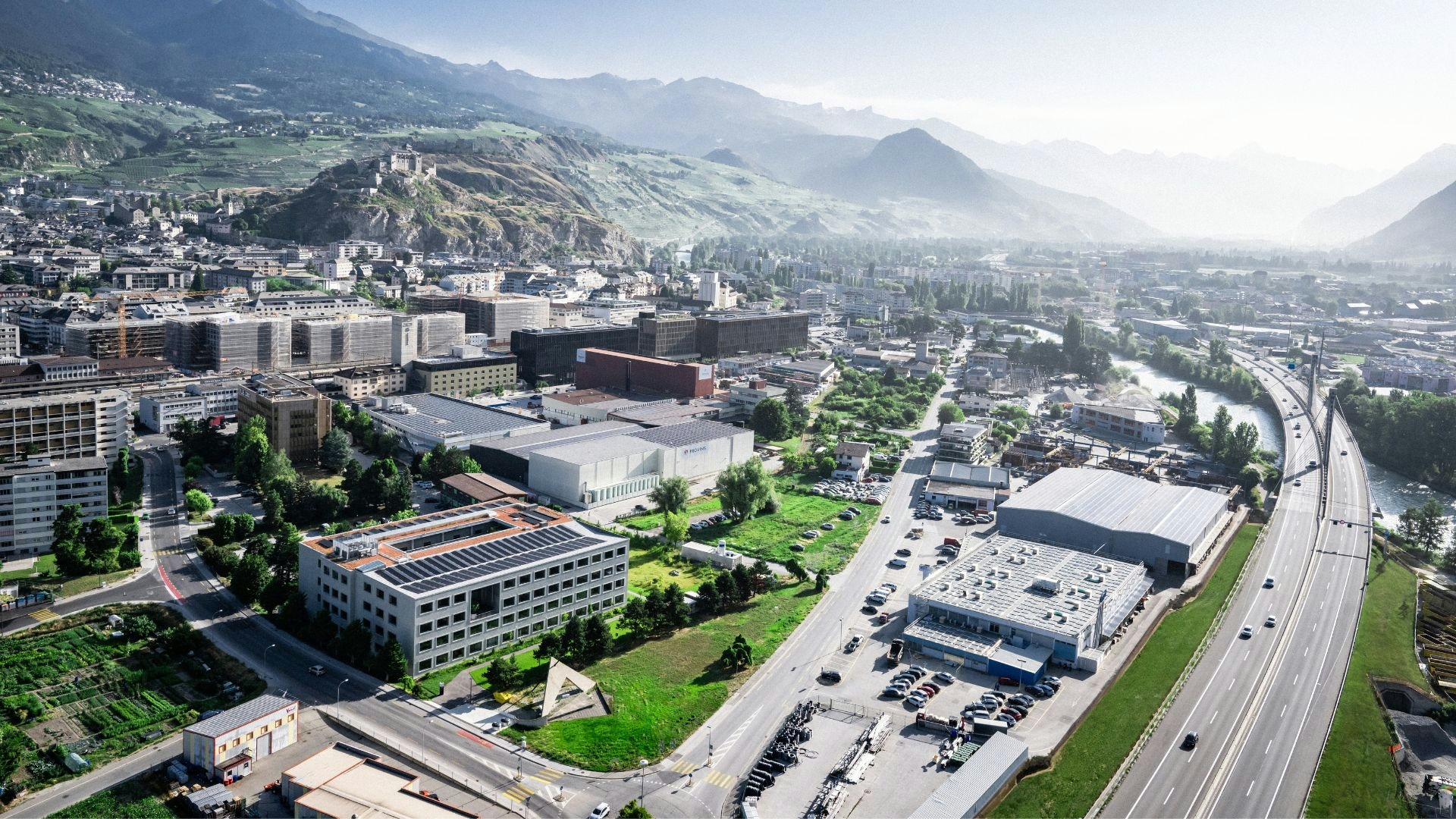
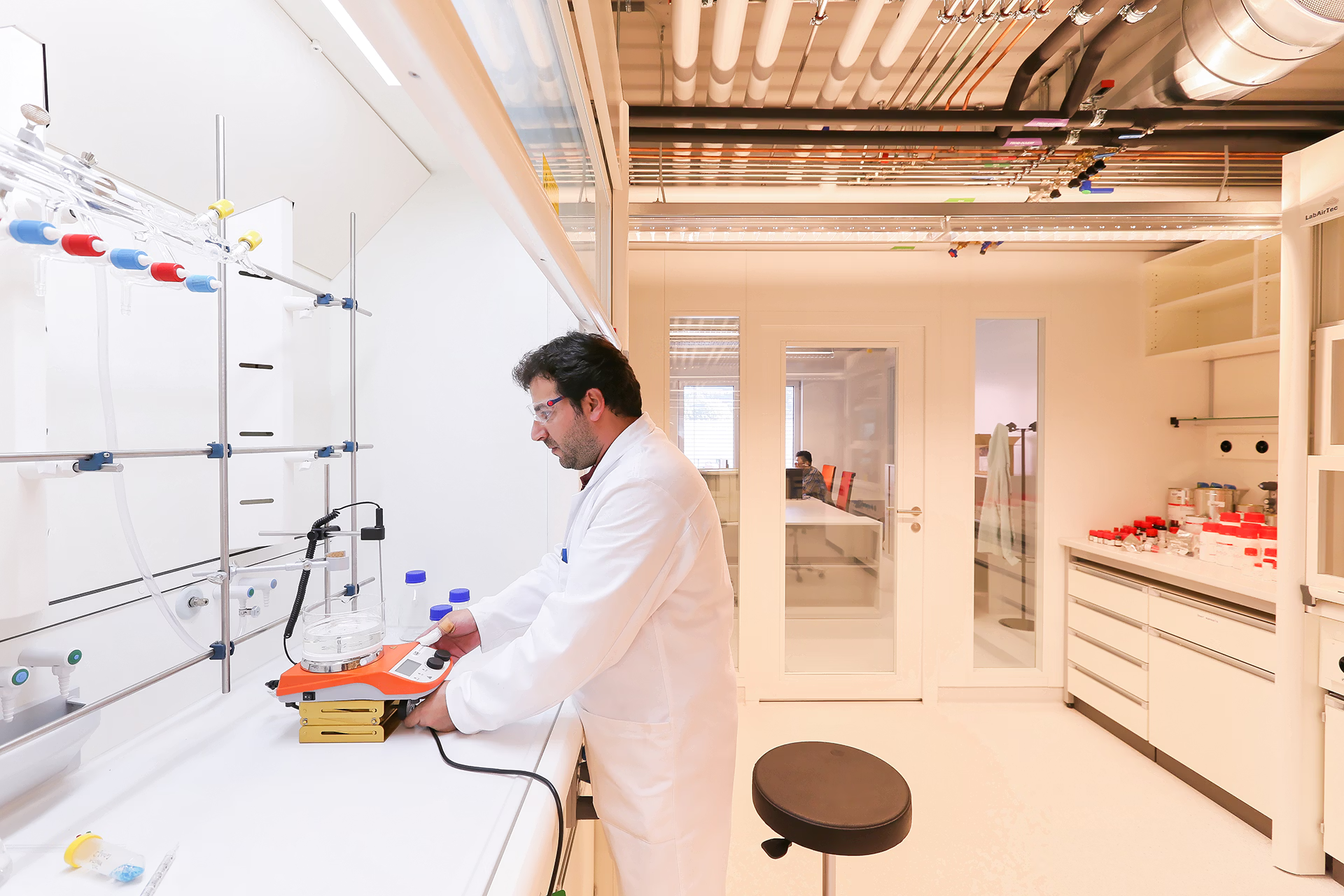
Twenty years ago, who would have imagined that Sion would become home to one of the most dynamic campuses in Switzerland, bringing together EPFL, HES-SO Valais-Wallis, Energypolis SA and many public and private partners? The first agreement, signed in 2012 between the Canton of Valais and EPFL, provided for 11 chairs, 150 researchers and 100 million francs of investment over ten years. Through its second phase in Valais, EPFL has nearly doubled the number of researchers initially announced and has exceeded 280 million francs of investment in research in the canton. This momentum will continue with the third phase, signed in 2024. It provides for six new chairs by 2032 – each comprising a professor and their team – together with a new building to host them. The first chairs will arrive as early as 2026.
2025 was a dynamic year, marked internally by a change of leadership and by the realization of key projects, such as the “P2G”, or “power-to-gas”, demonstrator. Shared with HES-SO Valais-Wallis and strongly supported by the Canton of Valais, this facility makes it possible to test certain decarbonization and energy-resilience technologies at a pre-industrial scale. The basic idea: use the surplus of solar energy produced in summer to make gas that can be stored for use in winter, when demand is highest and energy least abundant. The first tests are yielding very positive results, and ongoing exchanges with industry will validate these successes step by step. 2025 was also the final sprint to apply for a National Centre of Competence in Research (NCCR) in chemical separations. This NCCR was secured in early 2026, bringing twelve years of funding totalling 38 million francs.
Last January, the World Meteorological Organization confirmed that 2025 was one of the three warmest years ever recorded. The trend shows no sign of reversing. Under these conditions – modelled for nearly 40 years – research on alpine and extreme environments, which bear the full brunt of climate change with significant consequences for the global climate, is vital. It helps anticipate certain global trends to come. Beyond studying these effects, scientific support for the decarbonization of society – the “Net Zero” objective – is proving equally essential. In this respect, the research conducted in Sion on decarbonization and sustainable energy could have a major impact on the industrial and societal changes ahead. It is moreover carried out in close cooperation with major Valais industries, in order to best meet real-world needs.
From 2026 onwards, the first chairs of the third phase will move into ALPOLE; the competition for EPFL’s third building in Sion will be launched; the Pôle-Santé, which will also host EPFL research groups, will move closer to its inauguration; the “Horizon 2040” strategy will be drafted; the “Separations” NCCR will be rolled out; construction of the innovation park (Energypolis SA) will begin; and more. The phrase “a vibrant, dynamic campus” is not merely an image: it is a reality taking shape every day in Sion, with positive effects across the whole of Valais. We look forward to continuing this remarkable journey and to strengthening this ecosystem even further.
Enjoy your reading!
Gestion menu
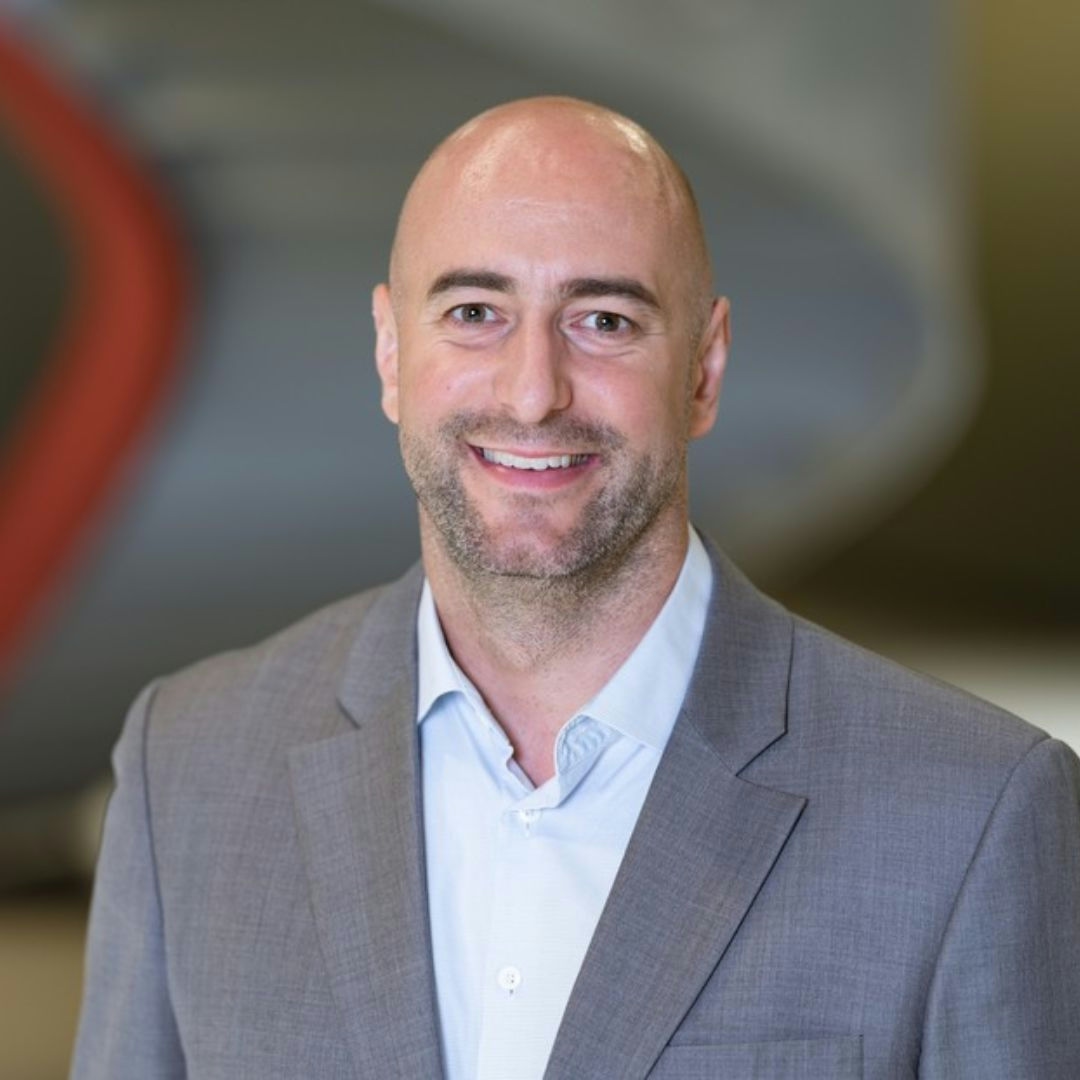
Léonard Evéquoz
Chief Operating Officer