The acceleration of climate change in the Arctic is having a profound effect on Greenland’s fjord systems. These systems are fragile because of the delicate link between the cryosphere, ocean, land, atmosphere and biosphere. Moreover, these iconic Greenlandic landscapes are at the heart of the socio-economic and cultural systems that govern local livelihoods. Warming induces the melting of glaciers and the detachment of ice blocks (calving), leading to a sharp increase in surrounding freshwater flows. Changes in these flows have an impact on the dynamics of marine ecosystems and the circulation of nutrients, which in turn affect the marine food web (food webs describe the food interactions between species in an ecosystem) with cascading effects: at lower trophic levels, changes in phytoplankton proliferation have an impact on atmospheric chemistry and cloud formation, and therefore on the surface radiation balance. At higher trophic levels, fish are affected, with major implications for local livelihoods and economies, which depend heavily on marine resources.
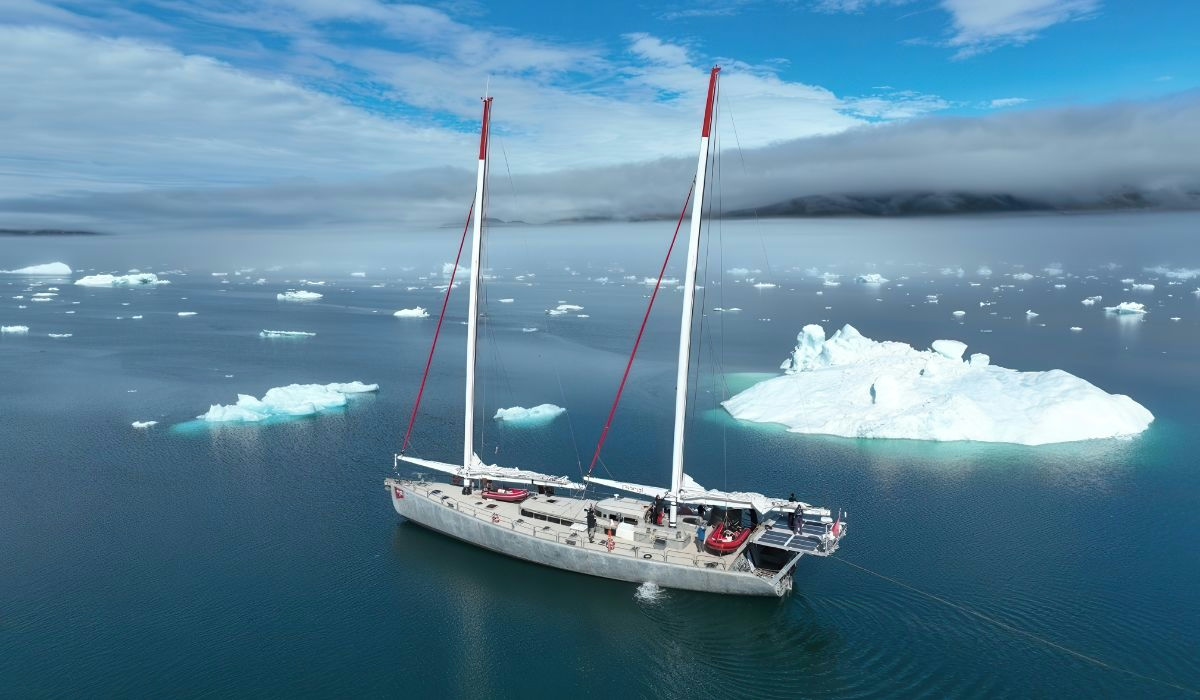
With GreenFjord, we want to better understand how climate change is affecting fjord ecosystems and how this is impacting biodiversity and livelihoods. The ultimate goal is to translate this new knowledge into models that can simulate and predict the future evolution of fjord systems, including glacial mass loss, trophic evolution and the carbon cycle. Our fieldwork will be carried out on land and at sea and will involve a high degree of participation by local populations. The main activities are as follows:
Cryosphere
Glacier evolution and impact on fjord water and nutrient circulation
Ocean
Physical and microbial characteristics of fjord systems
Biosphere
Determination of biodiversity using environmental DNA
Atmosphere
Influence of local natural emissions on cloud formation
Earth
Export of terrestrial organic matter to the ocean
Human
Understanding the relationship between local livelihoods and fjordic socio-ecosystems